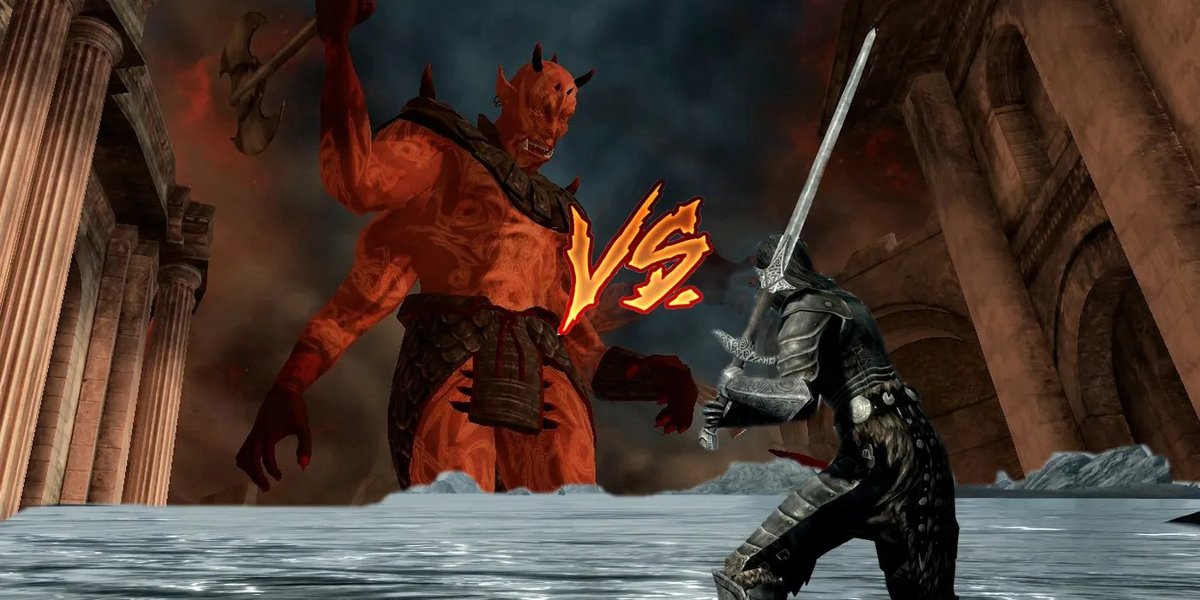
Stepping back into the sprawling, vibrant world of Cyrodiil has always been a journey for the ages, a true testament to the timeless appeal of The Elder Scrolls IV: Oblivion. But with the impending release of Oblivion Remastered in 2025, a crucial question arises for veterans and newcomers alike: should you dive into this shiny new version, or stick with the classic, heavily modded original? This isn't just about graphics; it's about stability, player experience, and the very soul of a beloved RPG.
For years, dedicated fans have painstakingly patched, polished, and transformed the 2006 original with a dizzying array of community-made modifications. Now, Bethesda is officially stepping in, promising a modern take. So, when it comes to Oblivion Remastered vs. Original Game with Mods, which version truly offers the definitive adventure through the Imperial Province?
At a Glance: Remastered vs. Modded Original
Choosing your path through Cyrodiil involves understanding some core differences. Here’s a quick breakdown to set the stage:
- Oblivion Remastered (2025):
- Pros: Official, significant visual and performance upgrades (ray tracing, DLSS/FSR4, SSD optimization), modernized gameplay systems (tighter combat, AI fixes, UI rework, native controller support), includes key community fixes officially.
- Cons: Some legacy bugs might persist, combat still not "modern ARPG" level, modding scene will be nascent at launch.
- Best For: First-timers, modern gamers seeking a seamless experience, those tired of modding headaches, players wanting current-gen hardware support.
- Original Oblivion with Mods:
- Pros: Thousands upon thousands of mods available right now (visual, gameplay, content overhauls), incredible customization potential, deep community knowledge base.
- Cons: Inherits base game "jank" (AI, combat, UI issues) that even mods struggle to fully fix, requires significant setup and troubleshooting, stability can be fragile, not optimized for modern hardware.
- Best For: Nostalgia enthusiasts, experienced modders who enjoy tinkering, players seeking niche content unavailable elsewhere, those with older hardware or a preference for the original "feel."
The Heart of Cyrodiil Reborn: What Oblivion Remastered Brings to the Table
Let's be clear: Oblivion Remastered isn't just a simple texture bump. Bethesda has gone back to the well, aiming to deliver an experience that feels both familiar and refreshingly new. Think of it less as a facelift and more as a complete architectural redesign with historical preservation in mind.
A Visual Renaissance: Stepping into a Modern Cyrodiil
The most immediately striking changes in Oblivion Remastered are, without a doubt, visual. The original game, while beautiful for its time, definitely shows its age. Bethesda's remaster tackles this head-on:
- HD Everything: Characters, environments, weapons, and even magic effects have been re-textured from the ground up. This isn't just a slight upscale; it's a comprehensive upgrade designed to bring the world up to modern fidelity standards. Expect to see the intricate details of Imperial architecture and the lush foliage of the Gold Coast with newfound clarity.
- Dynamic Lighting & Shadow Systems: Inspired by their work on titles like Starfield, Bethesda has implemented a much more sophisticated lighting engine. This means more realistic interplay of light and shadow, adding depth and atmosphere that was simply impossible in 2006. Sunlight filtering through a canopy of trees or the flickering glow of a dungeon torch will feel far more immersive.
- Ray Tracing Support: For those with compatible hardware, Oblivion Remastered will offer ray tracing, bringing truly natural reflections to water bodies and highly accurate global illumination. This feature alone can dramatically transform how light behaves in the world, adding a layer of realism to every vista.
- Rebuilt Character Models & Facial Animations: This is a big one. The original Oblivion is infamous for its "potato faces" and somewhat stiff character animations. The remaster promises rebuilt models and improved facial animations, making NPCs more expressive and conversations feel less robotic. This small detail can have a profound impact on immersion, helping you connect more deeply with Cyrodiil's inhabitants.
Performance Boosts: Smooth Sailing in the Imperial Province
Beyond the pretty pictures, Oblivion Remastered is engineered for modern gaming rigs, offering a suite of performance enhancements that will make the experience far smoother and more stable than the original ever was, even with extensive modding.
- DirectX 12 Support: Full integration of DirectX 12 means better optimization, improved stability, and more efficient resource utilization. This translates directly to fewer crashes and a more consistent frame rate, especially in bustling city environments.
- High Refresh Rate & Upscaling Support: Native 144Hz/240Hz monitor support ensures that gameplay feels incredibly fluid on high-refresh displays. Coupled with DLSS and FSR4 support, you can expect excellent performance scaling, allowing you to push higher resolutions and frame rates without sacrificing visual quality on a wide range of hardware.
- SSD/NVMe Optimization: Load times were a notorious pain point in the original Oblivion. With modern SSD/NVMe optimization, Remastered promises a massive reduction in these waits. Imagine fast-traveling across the map or entering a new dungeon with barely a pause – a game-changer for pacing and immersion.
Gameplay Refinements & Quality of Life Upgrades
It's not all about looks and speed. Bethesda has also taken the opportunity to address some of the original game's more frustrating quirks, making fundamental improvements to the gameplay experience.
- Tighter Combat: While it won't transform Oblivion into a precision action RPG like Elden Ring, the remaster brings improved hit detection and timing to combat. This should make encounters feel less "floaty" and more responsive, allowing for a more satisfying flow in battle.
- AI Overhaul: The "derpy" NPC behavior of the original game was a frequent target of jokes and modding efforts. The AI overhaul aims to make characters behave more realistically, with fewer instances of bizarre pathfinding or questionable decision-making. This means more believable interactions and a more convincing world.
- UI Rework & Controller Support: The original PC UI was notoriously clunky, especially for inventory management and quest tracking. Remastered features a cleaner UI rework and, crucially, proper native controller support. This is a huge boon for players who prefer to game on a gamepad, offering a much more intuitive and comfortable experience.
- More Reliable Auto-Save: Losing progress due to a forgotten save or a crash was a common frustration. The improved auto-save system in Remastered provides a much-needed layer of security, allowing you to explore with greater peace of mind.
Community Wisdom, Officially Included
One of the smartest moves Bethesda made with the remaster is acknowledging and integrating years of community effort. This means that many of the essential fixes and quality-of-life improvements that modders painstakingly developed are now baked into the official game.
- Unofficial Oblivion Patch Remastered Edition: This is huge. The UOP is an absolute must-have for the original game, fixing thousands of bugs and inconsistencies. Its official inclusion means a far more stable and polished experience right out of the box, without needing to mess with mod managers or load orders.
- Qarl’s Texture Pack-Inspired Upgrades: Qarl's Texture Pack was legendary for its visual overhaul. The remaster draws inspiration from these efforts, incorporating similar high-quality environmental textures to enhance the world's fidelity.
- Updated UI Mods for Widescreen and 4K Support: No more fiddling with ini files or specific UI mods to get the game to look right on modern monitors. The remaster natively supports widescreen and 4K resolutions with an updated UI, ensuring everything scales correctly and looks sharp.
- Expanded Mod Tools: Looking ahead, Bethesda is also providing expanded mod tools designed for easier content creation and sharing. While the modding scene for Remastered will take time to mature, this foundation promises a more accessible and robust future for community content.
The Modded Original: A Tinker's Paradise (and Purgatory)
For nearly two decades, the original Oblivion has been a playground for modders. With over 32,000 mods available on Nexus, the community has sculpted, twisted, and transformed Cyrodiil into countless variations. This depth of content is unparalleled, but it comes with its own set of challenges.
The Power (and Peril) of 32,000+ Mods
The sheer volume of mods for original Oblivion is staggering. You can find:
- Massive Overhauls: Projects like OOO (Oscuro's Oblivion Overhaul) or FCOM Convergence fundamentally change the game's balance, enemy spawns, and world exploration, offering entirely new gameplay experiences.
- Visual Enhancements: Beyond Qarl's, there are countless texture packs, weather mods, ENBs (Enhanced Natural Beauty) that completely transform the game's aesthetic, often pushing graphics far beyond what Bethesda imagined in 2006.
- New Content: Quests, dungeons, factions, spells, items, and even entirely new landmasses have been added, extending playtime indefinitely.
- Bug Fixes & QoL: Before the Unofficial Patch became essential, hundreds of smaller mods sought to address everything from broken quests to minor graphical glitches.
This incredible freedom allows you to tailor Oblivion exactly to your taste. Want a more challenging survival experience? There's a mod for that. Want to play as a sentient potato? Probably a mod for that too.
Unlocking Oblivion's True Potential (or Breaking It)
The beauty of a heavily modded original Oblivion lies in its potential. With enough effort, knowledge, and patience, you can create a truly unique and breathtaking version of the game. Modding guides stretching dozens of pages exist to walk you through the process of setting up a stable, visually stunning, and content-rich experience.
However, this is where the "purgatory" part comes in. The original game's engine and modding tools (while functional) are less powerful and forgiving than, say, Skyrim's. Installing hundreds of mods requires:
- Careful Planning: Understanding load order, compatibility patches, and potential conflicts is crucial.
- Mod Manager Savvy: Tools like Wrye Bash or Mod Organizer are essential, but have their own learning curves.
- Troubleshooting Expertise: Expect crashes, glitches, and frustrating debugging sessions as you find the right combination of mods that play nice together.
- Performance Trade-offs: Pushing the graphics too far, especially with an ENB, can tank frame rates even on modern hardware, as the original game isn't optimized for current-gen efficiencies.
For many, the process of modding becomes a game in itself, an enjoyable challenge. For others, it's a frustrating barrier to entry.
The Unshakeable "Jank" Factor
Despite the thousands of mods, one persistent issue plagues the original Oblivion: its core "jank." These are the fundamental design choices and engine limitations that even the most ambitious modders struggle to fully overcome.
- AI Idiosyncrasies: While mods can improve AI, the underlying behavior trees and pathfinding often lead to moments of absurdity. NPCs might still get stuck, walk into walls, or behave illogically in specific situations.
- Combat Clunkiness: The base game's combat is undeniably dated. Mods can add new animations, hitboxes, and spell effects, but the fundamental feel of swinging a sword or casting a spell often retains a certain stiffness that's hard to shake.
- UI Limitations: While UI mods can make the interface more palatable, the underlying structure often remains, making true modernization difficult.
- Stability Issues: Even with the Unofficial Patch, the original engine can be prone to crashes, especially when heavily modded. Memory limitations and script conflicts are common culprits, making long play sessions a gamble without frequent saving.
These issues, while charming to some, are precisely what Oblivion Remastered aims to fix at an engine level, offering a smoother, more coherent experience from the ground up.
Direct Showdown: Remastered vs. Fully-Modded Original
So, how do these two versions stack up in a head-to-head battle? Let's break down the key comparison points.
Visual Fidelity: Ray Tracing vs. Community Textures
- Oblivion Remastered: Here, the remaster truly shines. With official HD textures, dynamic lighting, and especially ray tracing, it achieves a level of graphical fidelity and realism that even the most ambitious mod packs for the original struggle to match. The rebuilt character models are a significant leap forward, making faces far more appealing and expressive. The overall visual cohesion is a major strength, as all elements are designed to work together seamlessly.
- Modded Original: A heavily modded original Oblivion can look stunning. High-resolution texture packs (like those inspired by Qarl's), advanced ENBs, and weather mods can create breathtaking screenshots. However, achieving this requires a patchwork of different mods from various creators, which can sometimes lead to visual inconsistencies or performance hits. While some aspects can rival or even surpass Remastered in specific areas (e.g., a highly customized ENB preset), the overall, consistent graphical upgrade across all aspects, especially with modern lighting and physics, is where the remaster pulls ahead.
Under the Hood: Stability & Performance
- Oblivion Remastered: This is arguably the remaster's strongest suit. Designed for modern hardware, with DirectX 12, SSD optimization, and native high refresh rate/upscaling support, it promises a level of stability and performance the original could only dream of. Reduced load times are a massive quality-of-life improvement. The official inclusion of the Unofficial Patch further solidifies its stability.
- Modded Original: The original Oblivion, even with mods, is notorious for its fragility. Achieving a stable, modded setup is a rite of passage, often involving extensive research, trial-and-error, and specific memory-management tools. While dedicated modders can create relatively stable builds, the underlying engine limitations mean that crashes, especially during long play sessions or in heavily scripted areas, are always a possibility. Performance can also be highly variable, especially with graphic overhauls, as the engine simply wasn't built for current-gen demands.
Gameplay Evolution: AI, Combat, UI
- Oblivion Remastered: The official AI overhaul, tighter combat, and comprehensive UI rework are game-changers. While the combat won't be as fluid as a pure action game, these changes address core issues that have frustrated players for years. Native controller support is also a huge win for accessibility and comfort. This results in a much more polished and user-friendly experience from minute one.
- Modded Original: While mods exist to improve AI, combat, and UI, they are often layered on top of the original systems, rather than fundamentally integrated. This means that while improvements are noticeable, they often can't fully overcome the "jank" of the base game. Combat mods might add new moves or rebalance stats, but the fundamental feel of the system remains. UI mods offer customization but can still feel somewhat antiquated compared to a ground-up redesign.
The Modding Frontier: Ease vs. Freedom
- Oblivion Remastered: At launch, the modding scene for Remastered will be embryonic. While Bethesda promises expanded tools and compatibility with the original TES Construction Kit, it will take months, if not longer, for the community to develop a rich library of new content. However, the ease of modding is expected to be significantly higher due to improved tools and a more stable base game. For those who want to dip their toes into modding without the headache, this is a clear advantage.
- Modded Original: Here, the original game reigns supreme in terms of sheer freedom and volume. With tens of thousands of mods available right now, the possibilities are virtually limitless. If you have a very specific vision for your Oblivion experience, chances are there's a mod (or several) to help you achieve it. However, this freedom comes at the cost of ease. Expect to invest significant time in learning, configuring, and troubleshooting.
Addressing Common Questions and Misconceptions
Let's clear up some common queries about this grand return to Cyrodiil.
Is This Just a Fan Project Like Skyblivion?
Absolutely not. Oblivion Remastered is an official Bethesda update. This is distinct from ambitious fan projects like Skyblivion, which aim to rebuild Oblivion entirely within the Skyrim engine. While fan projects are incredible feats of community passion, an official release from the original developers comes with inherent advantages in terms of engine access, resource allocation, and core system overhauls.
Can I Use My Old Save Files from Original Oblivion?
Unfortunately, no. The significant engine changes, graphical overhauls, and gameplay system refinements mean that save files from the original Oblivion are not compatible with Oblivion Remastered. Think of it as a new game that deeply respects its predecessor. It's a fresh start, which for many, is part of the appeal.
So, Is Oblivion Remastered worth buying?
Based on the information available and the direction Bethesda is taking, the answer is a resounding yes, especially if you're looking for the definitive way to experience the game. It addresses many of the original's long-standing issues, enhances the 2006 visuals in a comprehensive manner, improves faces, and presents the legendary adventure in a new, accessible light. For a smooth experience, modern performance boosts, and current-gen hardware support, it's a superb package where extensive modding is less vital compared to other titles like Skyrim (which often needs mods to feel complete).
Making Your Choice: Who Should Play Which Version?
The decision ultimately comes down to your priorities, experience, and tolerance for tinkering.
For the First-Timer or Modern Gamer
If you've never experienced the magic of Oblivion or you're a gamer accustomed to modern conveniences and performance, Oblivion Remastered is unequivocally your best bet. It provides a polished, stable, and visually appealing entry point without the steep learning curve and potential frustrations of modding the original. You get all the classic RPG systems, deep faction quests, and open-world charm without having to battle archaic interfaces or unstable engines. Just install and play.
For the Nostalgic Purist with a Tinkering Habit
If you grew up with the original Oblivion and have a deep love for its quirks, or if you simply enjoy the process of customizing and optimizing games with mods, the heavily modded original still holds a unique appeal. You have immediate access to an enormous library of content and visual upgrades, allowing for an incredibly personalized experience. You're willing to put in the time and effort to troubleshoot, experiment, and potentially live with a few crashes in exchange for unparalleled freedom. This is for the dedicated PC gamer who sees modding as part of the fun.
For the Patient Modder
If you enjoy modding, but prefer an easier, more stable platform, you might consider starting with Oblivion Remastered and waiting for its modding scene to mature. The promise of expanded mod tools and a more robust foundation means that the Remastered version could eventually become the superior canvas for community content, offering similar freedom but with far greater stability and ease of installation. This path requires patience, but could pay off handsomely in the long run.
The Future of Cyrodiil: Modding the Remastered Edition
While Oblivion Remastered will be a fantastic experience out of the box, the future of its modding scene is something to watch closely. Bethesda has indicated that the TES Construction Kit from the original game can open files from the remaster, suggesting that proper modding support "will soon open."
This means that while existing mods from the original game won't directly port over due to the engine changes, the groundwork is being laid for a vibrant new modding community. We can expect new assets, quests, and potentially even new engine-level tweaks built specifically for the Remastered version. It will take a few months for creators to understand the new tools and develop significant content, but the potential for the Remastered version to become a new modding powerhouse is immense. Imagine the stability and performance of the remaster combined with the creativity of the modding community—a truly exciting prospect.
Beyond the Comparison: A Timeless Adventure Awaits
Ultimately, regardless of whether you choose the meticulously updated Oblivion Remastered or the endlessly customizable original game with mods, the core truth remains: The Elder Scrolls IV: Oblivion is a monumental achievement in RPG design. Its vibrant world, memorable characters, deep faction quests, and freedom of choice have captivated millions for nearly two decades.
The choice between Oblivion Remastered vs. Original Game with Mods isn't about one being inherently "bad," but about finding the right fit for you and your gaming preferences. The remaster offers a polished, accessible, and modern entry point, preserving the classic adventure while shedding its aging skin. The modded original offers unparalleled freedom for those willing to get their hands dirty. Whichever path you choose, the gates of Cyrodiil await, ready to pull you into an adventure that stands the test of time.